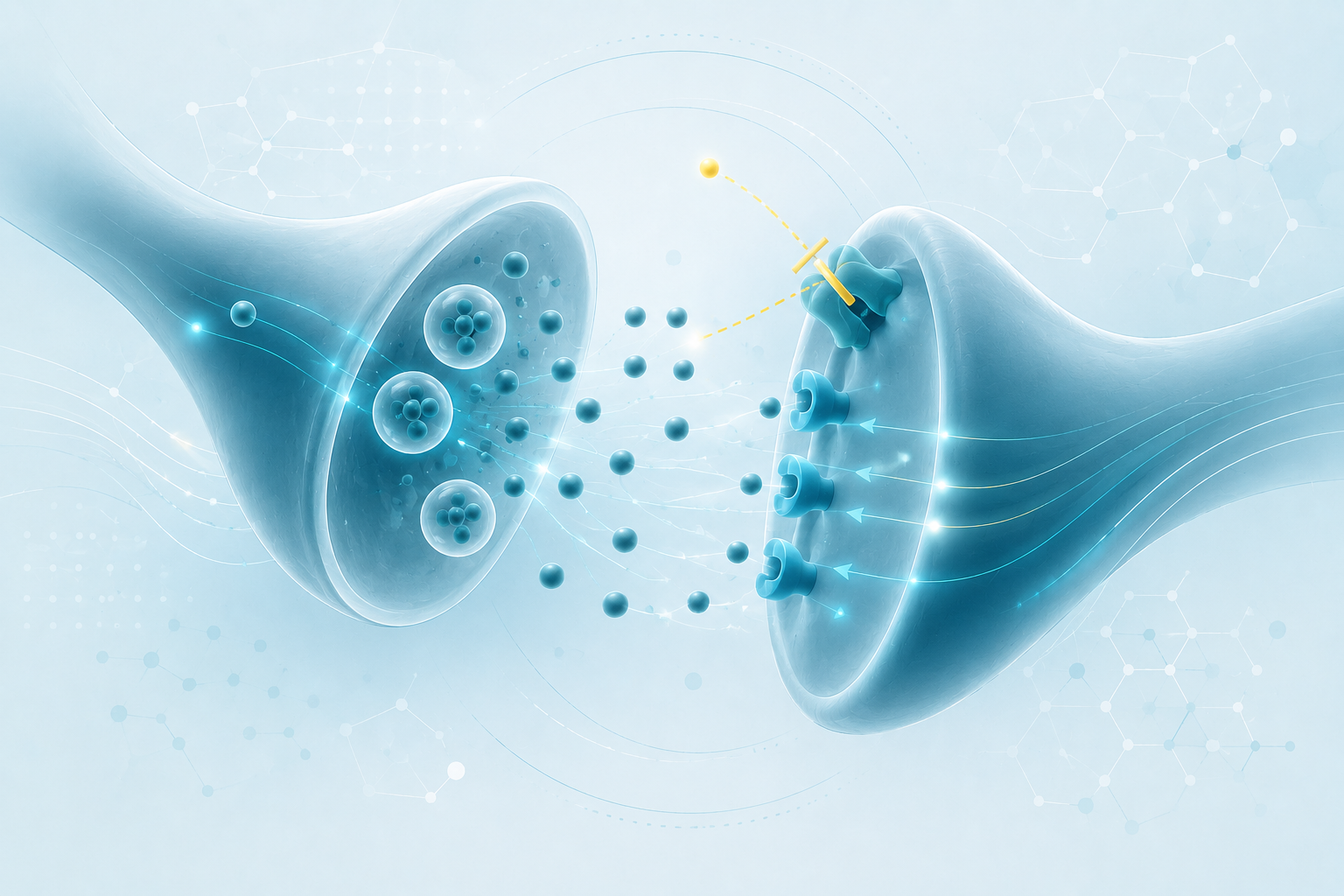
A detailed, evidence‑based explanation of how Dapoxetine works at the neurotransmitter level, why its onset is
uniquely rapid, why its effect remains short‑acting, and how these pharmacological properties translate into
clinically meaningful improvements in intravaginal ejaculatory latency time (IELT).
Dapoxetine acts as a potent, selective serotonin reuptake inhibitor (SSRI) with high affinity for the serotonin
transporter (SERT). By blocking serotonin reuptake, it increases synaptic serotonin concentrations in key
central nervous system pathways that regulate the ejaculatory reflex. Enhanced serotonergic signaling
strengthens inhibitory control over spinal and supraspinal ejaculation circuits, reducing reflex excitability
and improving voluntary control.
A defining feature of Dapoxetine’s mechanism is its rapid pharmacokinetic profile. The drug is absorbed quickly,
reaches peak plasma levels within hours, and engages SERT efficiently. This allows it to be used on‑demand
rather than chronically, unlike traditional SSRIs that require continuous daily dosing to achieve similar
serotonergic modulation.
Its short elimination half‑life is equally important. Dapoxetine is cleared rapidly, preventing accumulation and
minimizing persistent SSRI‑type effects. This transient exposure produces a strong therapeutic window during
sexual activity, followed by fast washout — a pharmacological profile uniquely suited for situational treatment
of premature ejaculation.
Together, these properties — rapid onset, high SERT affinity, central action on ejaculation pathways, and fast
clearance — create a mechanism optimized for improving IELT. For deeper scientific context, explore:
Pharmacokinetics,
PE Pathophysiology,
Clinical Evidence.
Dapoxetine functions as a highly selective serotonin transporter (SERT) inhibitor, placing it within the
pharmacological class of short‑acting SSRIs. By blocking SERT, the protein responsible for reabsorbing
serotonin into the presynaptic neuron, Dapoxetine increases serotonin concentrations within the synaptic
cleft. This elevation enhances serotonergic signaling across neural circuits that regulate the timing
and coordination of the ejaculatory reflex. The resulting effect is a stronger inhibitory influence on
the pathways that trigger ejaculation, contributing directly to improved control and increased
intravaginal ejaculatory latency time (IELT).
The neurochemical impact of Dapoxetine extends beyond simple serotonin elevation. The drug modulates
several key serotonin receptor subtypes—particularly 5‑HT1A, 5‑HT1B, and 5‑HT2C—each of which plays a
distinct role in ejaculatory regulation. Activation of 5‑HT1A receptors is associated with reduced
inhibitory tone, while stimulation of 5‑HT1B and 5‑HT2C receptors enhances inhibitory control over
spinal and supraspinal ejaculatory centers. Dapoxetine’s rapid rise in synaptic serotonin shifts the
balance toward these inhibitory pathways, producing a clinically meaningful delay in ejaculation.
These receptor‑level effects converge on the central ejaculatory control network, which integrates
signals from the brainstem, limbic system, and spinal cord. By strengthening inhibitory serotonergic
input, Dapoxetine dampens the excitatory drive that normally accelerates the ejaculatory reflex. This
central mechanism distinguishes Dapoxetine from peripheral agents and explains its rapid onset of
action, short duration, and suitability for on‑demand use.
For a deeper look at the underlying biology of premature ejaculation, see
PE Pathophysiology.
Serotonin Receptors Involved in Ejaculatory Control
Receptor
Role
Effect of Activation
5‑HT1A
Modulates inhibitory tone
May reduce inhibition and shorten latency
5‑HT1B
Enhances central inhibitory pathways
Delays ejaculation by increasing inhibition
5‑HT2C
Strengthens supraspinal control
Further prolongs IELT through enhanced inhibition
SERT Inhibition & Synaptic Effects
Dapoxetine acts as a highly selective inhibitor of the serotonin transporter (SERT), the membrane protein
responsible for reuptake of serotonin from the synaptic cleft back into the presynaptic neuron. By binding
to SERT with high affinity, Dapoxetine temporarily blocks this reuptake process, leading to a rapid increase
in extracellular serotonin levels. This surge enhances serotonergic neurotransmission across central
pathways involved in regulating the ejaculatory reflex.
Elevated serotonin in the synaptic cleft amplifies signaling through key receptor subtypes—particularly
5‑HT1B and 5‑HT2C—which exert inhibitory control over spinal and supraspinal ejaculatory centers.
Strengthening these inhibitory pathways delays the initiation of the ejaculatory reflex, resulting in a
measurable increase in intravaginal ejaculatory latency time (IELT). This mechanism explains why Dapoxetine
produces clinically meaningful improvements in control and timing.
A defining feature of Dapoxetine is the speed at which these synaptic changes occur. Unlike traditional
SSRIs such as sertraline or paroxetine, which require chronic daily dosing to achieve steady‑state SERT
inhibition, Dapoxetine reaches peak plasma concentration within hours. Its rapid absorption and short
half‑life allow it to deliver strong, transient serotonergic modulation without long‑term accumulation. This
makes Dapoxetine uniquely suited for on‑demand use, providing fast, targeted enhancement of inhibitory
control without the sustained neurochemical adaptation associated with conventional SSRIs.
For additional background on the neurobiology of premature ejaculation, see
PE Pathophysiology.
SERT Inhibition: Dapoxetine vs Traditional SSRIs
Parameter
Dapoxetine
Sertraline/Paroxetine
Onset of action
Rapid (within hours)
Slow (requires weeks of daily dosing)
Half‑life
Very short; no accumulation
Long; significant accumulation
Use pattern
On‑demand
Chronic daily therapy
Primary clinical goal
Increase IELT via fast serotonergic modulation
Treat depression/anxiety; IELT increase is secondary
Rapid Absorption & Short Half‑Life
Dapoxetine’s clinical profile is defined by its unusually rapid absorption, which enables a fast onset of
therapeutic action. After oral administration, the drug is quickly taken up through the gastrointestinal
tract and reaches systemic circulation within a short timeframe. This rapid uptake allows Dapoxetine to
achieve its peak plasma concentration (Tmax) approximately 1–2 hours after dosing. As plasma
levels rise, serotonergic activity intensifies across central pathways involved in ejaculatory control,
producing early improvements in latency and control during sexual activity.
The speed of absorption is a key reason why Dapoxetine works effectively as an on‑demand treatment. Unlike
traditional SSRIs, which require weeks of continuous dosing to reach steady‑state levels, Dapoxetine
delivers its therapeutic effect within a single dosing window. This makes timing predictable and allows
patients to take the medication 1–3 hours before anticipated sexual activity while maintaining flexibility.
Equally important is Dapoxetine’s short elimination half‑life, which is significantly shorter than that of
conventional SSRIs. This rapid clearance prevents drug accumulation in the body, even with repeated use.
Minimal accumulation reduces the likelihood of long‑term serotonergic adverse effects and lowers the risk of
persistent symptoms such as insomnia, emotional blunting, or sexual dysfunction—effects more commonly
associated with chronic SSRI therapy.
The combination of fast absorption and rapid elimination creates a targeted pharmacokinetic profile: strong,
time‑limited serotonergic modulation during the therapeutic window, followed by quick return to baseline.
This design supports both efficacy and safety, making Dapoxetine uniquely suited for intermittent use in
premature ejaculation.
For a full breakdown of absorption, distribution, metabolism, and elimination, see
Pharmacokinetics.
Central Nervous System Action
Dapoxetine exerts its therapeutic effect primarily through modulation of central nervous system (CNS)
pathways that coordinate the ejaculatory reflex. Ejaculation is controlled by a network of spinal and
supraspinal centers, including the spinal generator of ejaculation, the medullary nuclei, and higher
cortical regions involved in emotional and behavioral regulation. By enhancing serotonergic signaling within
these circuits, Dapoxetine strengthens inhibitory control over the reflex, delaying its initiation and
improving overall regulation.
At the spinal level, serotonergic input influences the spinal generator responsible for orchestrating the
motor and autonomic components of ejaculation. Increased serotonin—driven by SERT inhibition—reduces
excitatory drive within this generator, raising the threshold required to trigger the reflex. This
modulation directly contributes to increased intravaginal ejaculatory latency time (IELT) and more
predictable timing.
At the supraspinal level, Dapoxetine affects brainstem and limbic structures that integrate sensory,
emotional, and cognitive signals related to sexual activity. Enhanced activation of inhibitory receptors
such as 5‑HT1B and 5‑HT2C dampens the central excitatory pathways that normally accelerate ejaculation. This
top‑down modulation improves voluntary control, reduces performance‑related urgency, and supports a more
stable physiological response.
Together, these CNS effects create a coordinated delay in the ejaculatory reflex. By acting rapidly and
clearing quickly, Dapoxetine provides strong but time‑limited modulation without the long‑term neurochemical
adaptation associated with chronic SSRIs. This balance between efficacy and reversibility is central to its
suitability as an on‑demand therapy for premature ejaculation.
Peripheral Effects
Although Dapoxetine’s primary mechanism of action is centered within the brain and spinal cord, the
medication also produces measurable peripheral effects that contribute to its overall therapeutic profile.
Peripheral sensory nerves located in the genital region play an important role in transmitting tactile and
excitatory signals that participate in the ejaculatory reflex. By increasing serotonergic tone systemically,
Dapoxetine can subtly modulate the activity of these peripheral nerve endings, reducing the intensity of
sensory input that reaches central processing centers.
This reduction in peripheral sensitivity does not produce numbness or local anesthesia but instead slightly
dampens the excitatory signaling that accelerates the ejaculatory response. The effect is modest on its own
but becomes clinically meaningful when combined with the drug’s strong central inhibition of spinal and
supraspinal pathways. Together, these mechanisms create a synergistic delay in the reflex arc, contributing
to increased intravaginal ejaculatory latency time (IELT) and improved control.
The synergy between central and peripheral actions is a defining feature of Dapoxetine’s pharmacology. While
central serotonergic modulation provides the primary inhibitory effect, peripheral modulation helps
stabilize sensory input, reducing the likelihood of rapid escalation toward ejaculation. This integrated
response supports more predictable timing and enhances the overall therapeutic benefit of on‑demand
treatment.
Impact on IELT
Dapoxetine’s mechanism of action directly translates into a measurable and clinically significant increase
in intravaginal ejaculatory latency time (IELT). By inhibiting the serotonin transporter (SERT), the drug
rapidly elevates synaptic serotonin levels, strengthening inhibitory signaling through key receptors such as
5‑HT1B and 5‑HT2C. These receptors modulate both spinal and supraspinal components of the ejaculatory
reflex, raising the threshold required to trigger ejaculation. As a result, men experience a longer latency
period and improved control during sexual activity.
Randomized controlled trials consistently demonstrate that Dapoxetine produces a dose‑dependent increase in
IELT. The 30 mg dose typically results in a two‑ to three‑fold improvement over baseline, providing
meaningful benefit for most patients. For individuals requiring a stronger effect, the 60 mg dose delivers a
three‑ to four‑fold increase, reflecting a more pronounced serotonergic modulation. These findings have been
replicated across multiple large‑scale, multicenter studies, confirming both the reliability and clinical
relevance of the effect.
The difference between the two doses is not only quantitative but also functional. While 30 mg offers
substantial improvement with a favorable tolerability profile, 60 mg provides enhanced efficacy for men who
do not achieve sufficient benefit at the lower dose. This flexibility allows clinicians to tailor therapy
based on individual response while maintaining predictable pharmacokinetics and safety.
For detailed clinical data and study summaries, see
Clinical Evidence.
IELT Increase by Dose
Dose
Mean IELT Increase
Range
30 mg
~2–3× baseline
1.5× to 3.5×
60 mg
~3–4× baseline
2.5× to 5×
Why Dapoxetine Works Faster Than SSRIs
Dapoxetine’s uniquely rapid onset is the result of a combination of pharmacokinetic and pharmacodynamic
properties that distinguish it from traditional SSRIs such as sertraline or paroxetine. After oral
administration, Dapoxetine is absorbed quickly and reaches peak plasma concentration (Tmax)
within 1–2 hours, enabling fast engagement of central serotonergic pathways involved in ejaculatory control.
In contrast, conventional SSRIs require days to weeks of continuous dosing to reach steady‑state levels
sufficient to influence serotonin signaling.
Pharmacodynamically, Dapoxetine produces an immediate and robust SERT inhibition, rapidly increasing
synaptic serotonin and activating inhibitory receptors such as 5‑HT1B and 5‑HT2C. These receptors modulate
spinal and supraspinal components of the ejaculatory reflex, delaying ejaculation without the need for
long‑term neurochemical adaptation. Traditional SSRIs rely on gradual receptor desensitization and
downstream neuroplastic changes, which explains their slow therapeutic onset.
Another key factor is the absence of drug accumulation. Dapoxetine’s short half‑life allows it to clear
quickly after producing its effect, avoiding the sustained serotonergic exposure associated with daily
SSRIs. This not only contributes to its rapid onset but also reduces the risk of long‑term side effects such
as emotional blunting or persistent sexual dysfunction.
Dapoxetine’s mechanism of action is defined by rapid, targeted modulation of serotonergic pathways that
regulate the ejaculatory reflex. By selectively inhibiting the serotonin transporter (SERT), the drug
quickly increases synaptic serotonin levels, activating inhibitory receptors such as 5‑HT1B and 5‑HT2C
across spinal and supraspinal centers. This enhanced inhibitory signaling raises the threshold required to
trigger ejaculation, resulting in a predictable increase in intravaginal ejaculatory latency time (IELT) and
improved control.
The drug’s effectiveness stems from its ability to combine fast pharmacokinetics with precise
pharmacodynamic action. Dapoxetine reaches peak plasma concentration within 1–2 hours, allowing it to exert
its effect during a narrow therapeutic window aligned with sexual activity. Its short half‑life ensures that
serotonergic modulation is strong but temporary, providing meaningful clinical benefit without long‑term
neurochemical adaptation.
This same pharmacokinetic profile also underpins Dapoxetine’s favorable safety for on‑demand use. Because
the drug clears rapidly, it avoids the accumulation associated with traditional SSRIs, reducing the risk of
persistent serotonergic side effects such as emotional blunting, insomnia, or chronic sexual dysfunction.
The result is a mechanism that is both potent and self‑limiting—effective when needed, and quickly
reversible afterward.
Together, these properties make Dapoxetine uniquely suited as the only approved on‑demand pharmacological
therapy for premature ejaculation, offering rapid action, strong efficacy, and a safety profile optimized
for intermittent use.
Dapoxetine – Mechanism of Action: Frequently Asked Questions
Dapoxetine increases IELT by enhancing serotonergic inhibition within the central
ejaculatory reflex pathways. By blocking the serotonin transporter (SERT), it raises
synaptic serotonin levels in key spinal and supraspinal circuits that regulate timing
and control of ejaculation. Higher serotonin strengthens inhibitory signaling, reducing
reflex excitability and delaying the point of no return. This mechanism does not numb
sensation but improves central control, which is why IELT increases consistently across
clinical studies.
Dapoxetine has an unusually rapid pharmacokinetic profile for an SSRI. It is absorbed
quickly, reaches peak plasma concentration within 1–2 hours, and binds SERT with high
affinity. This allows it to modulate serotonin levels almost immediately after dosing.
Unlike traditional SSRIs, which require chronic administration to accumulate in the
brain, Dapoxetine is optimized for on‑demand use. Its fast onset is a direct result of
its molecular design and rapid distribution into central nervous system tissues.
Yes. Dapoxetine is a fully active selective serotonin reuptake inhibitor (SSRI) with
strong affinity for the serotonin transporter. What makes it unique is not the mechanism
itself but the pharmacokinetic profile: rapid absorption, high peak concentration, and
very short half‑life. These properties allow it to deliver SSRI‑like serotonergic
modulation without requiring daily dosing. It behaves like a classical SSRI at the
receptor level but is optimized for short‑term, situational use rather than chronic
antidepressant therapy.
Dapoxetine’s primary action is on serotonin, not dopamine. It has minimal affinity for
dopamine transporters and does not significantly alter dopaminergic signaling. However,
serotonin and dopamine systems interact indirectly in the brain, so some downstream
modulation may occur. These effects are secondary and not considered part of the
therapeutic mechanism. The clinically relevant action remains SERT inhibition and
increased serotonergic control over the ejaculatory reflex.
The mechanism itself does not change between 30 mg and 60 mg. In both cases, Dapoxetine
inhibits SERT and increases synaptic serotonin. The difference lies in the magnitude of
serotonergic modulation. Higher doses produce stronger SERT occupancy and more robust
inhibition of the ejaculatory reflex. This is why IELT improvements tend to be greater
at 60 mg. The pharmacodynamic pathway remains identical; only the intensity of the
effect varies with dose.
Dapoxetine works primarily through central mechanisms. It increases serotonin levels in
brain and spinal cord pathways that regulate the ejaculatory reflex. These circuits
coordinate timing, inhibition, and sensory processing. There is no evidence that
Dapoxetine acts directly on peripheral tissues such as penile nerves or blood vessels.
Its therapeutic effect is driven by enhanced central inhibitory control, which reduces
reflex excitability and delays ejaculation.
Dapoxetine was engineered to have a short half‑life to avoid long‑term accumulation and
persistent SSRI‑type effects. It is rapidly metabolized and cleared, producing a strong
but temporary serotonergic effect during the therapeutic window. This design allows
on‑demand use while minimizing residual activity after the intended timeframe. The short
half‑life is a deliberate pharmacological feature that differentiates Dapoxetine from
traditional SSRIs used for chronic treatment.
Dapoxetine is not designed to alter libido, and clinical studies show minimal impact on
sexual desire. Its mechanism targets ejaculatory control rather than arousal pathways.
Because it is taken on‑demand and cleared quickly, it avoids the chronic serotonergic
effects that sometimes reduce libido with long‑term SSRI use. Most men report unchanged
or improved sexual satisfaction due to better control, but the drug itself does not
directly stimulate or suppress desire.
Yes, the core mechanism—SERT inhibition—is identical to traditional SSRIs. The
difference lies in pharmacokinetics, not pharmacodynamics. Dapoxetine produces rapid,
high‑intensity serotonergic modulation without chronic accumulation. Traditional SSRIs
require weeks of daily dosing to achieve stable receptor occupancy. Dapoxetine delivers
the same mechanism in a short, controlled window, making it suitable for on‑demand use
rather than continuous therapy.
Yes. Dapoxetine enhances serotonergic inhibition within the spinal and supraspinal
circuits that coordinate the ejaculation reflex. These pathways integrate sensory input,
arousal signals, and motor output. By increasing serotonin levels, Dapoxetine reduces
reflex excitability and delays the transition to the ejaculatory phase. This central
modulation is the primary reason IELT increases and why the drug is effective for men
with premature ejaculation.