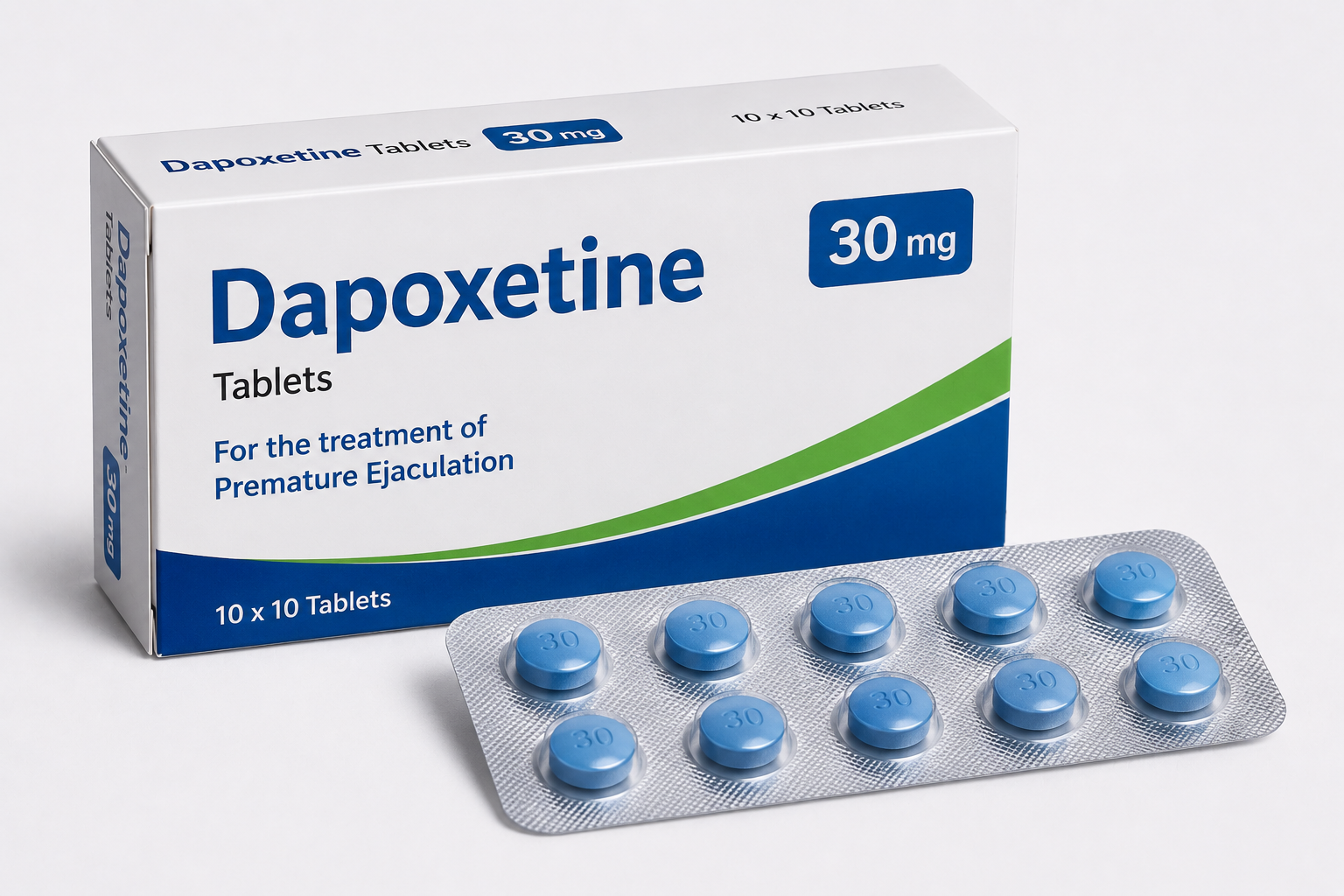
Dapoxetine (also known by the brand name Priligy) is a short‑acting, on‑demand SSRI specifically developed to treat premature ejaculation (PE). Unlike traditional SSRIs used for depression, Dapoxetine is optimized for rapid absorption, fast onset, and short duration, making it uniquely suited for men who need flexible, event‑based control over ejaculation timing. As the only SSRI approved in many regions for PE, it provides a clinically proven increase in intravaginal ejaculatory latency time (IELT) and improved control, confidence, and sexual satisfaction.
The medication works by enhancing serotonin activity in key neural pathways involved in ejaculatory reflex regulation. This mechanism helps delay ejaculation and reduce hypersensitivity, offering a meaningful improvement for men with lifelong or acquired PE. Because Dapoxetine is taken only when needed, it avoids the continuous daily exposure associated with standard antidepressants and maintains a favorable safety profile when used correctly.
As with any medication, Dapoxetine has important safety considerations. Most side effects are mild and transient, but understanding the basics of tolerability, contraindications, and drug interactions is essential before starting therapy. This overview page provides a concise, evidence‑based introduction to how Dapoxetine works, who it is suitable for, how quickly it acts, how long it lasts, and what to expect in terms of benefits and risks. For deeper clinical details, explore the dedicated sections below.
Key pages: Mechanism of Action • Dosage • Side Effects • Interactions • Price Guide
Dapoxetine is a short‑acting selective serotonin reuptake inhibitor (SSRI) developed specifically for the treatment of premature ejaculation (PE) in adult men. Unlike traditional SSRIs designed for depression, Dapoxetine was engineered to target the neurobiological mechanisms responsible for rapid ejaculation. It is the only SSRI approved in many regions for PE, offering men a fast, flexible, and event‑based approach to improving control over ejaculation.
As a short‑acting SSRI, Dapoxetine features rapid absorption and a significantly shorter half‑life than antidepressant SSRIs. This allows it to be taken on‑demand, typically 1–3 hours before sexual activity, rather than daily. The on‑demand model is one of its key advantages: it provides clinically meaningful improvements in intravaginal ejaculatory latency time (IELT), control, and sexual satisfaction without requiring continuous SSRI exposure.
Dapoxetine is indicated for men who consistently ejaculate within one to two minutes of penetration and experience reduced control, distress, or interpersonal difficulty. Its mechanism of action involves enhancing serotonin activity in neural pathways that regulate the ejaculatory reflex. By increasing serotonin availability, Dapoxetine delays ejaculation and reduces hypersensitivity, offering a targeted therapeutic effect distinct from traditional SSRIs.
The differences between Dapoxetine and classic SSRIs such as sertraline or paroxetine are substantial. Traditional SSRIs require daily dosing, accumulate gradually, and are intended for mood disorders. Dapoxetine, by contrast, acts quickly, clears rapidly, and is optimized for situational use — making it a practical option for men who prefer treatment only when needed.
| Parameter | Dapoxetine | SSRIs (Sertraline / Paroxetine) |
|---|---|---|
| Primary Use | Premature ejaculation (PE) | Depression, anxiety disorders |
| Dosing Pattern | On‑demand before sexual activity | Daily, continuous |
| Onset of Action | Fast, within hours | Slow, requires weeks |
| Half‑Life | Very short | Long |
| Purpose‑Built for PE | Yes | No |
Dapoxetine works by inhibiting the serotonin transporter (SERT), the protein responsible for reabsorbing serotonin back into presynaptic neurons. By blocking SERT, Dapoxetine increases the concentration of serotonin in the synaptic cleft, enhancing serotonergic signaling in neural pathways that regulate the ejaculatory reflex. This mechanism is central to its therapeutic effect in premature ejaculation (PE), where serotonin plays a key role in delaying ejaculation and improving control.
The increase in synaptic serotonin strengthens inhibitory control over the spinal and supraspinal circuits involved in ejaculation. As a result, men taking Dapoxetine typically experience a longer intravaginal ejaculatory latency time (IELT), improved control, and reduced hypersensitivity. Clinical studies consistently show that Dapoxetine can increase IELT by two to three times compared to baseline, making it one of the most effective pharmacological options for PE.
One of the defining features of Dapoxetine is its rapid onset of action. Unlike traditional SSRIs, which require weeks of continuous dosing to reach therapeutic levels, Dapoxetine is absorbed quickly and reaches peak plasma concentration within hours. This fast pharmacokinetic profile allows it to be taken on‑demand, typically 1–3 hours before sexual activity, providing flexibility and avoiding the need for daily medication.
The short half‑life of Dapoxetine also contributes to its unique safety and usability profile. The drug is cleared rapidly from the body, minimizing long‑term accumulation and reducing the risk of persistent side effects commonly associated with chronic SSRI therapy. This combination of fast onset, targeted serotonergic action, and rapid clearance makes Dapoxetine a purpose‑built treatment for men seeking situational control over ejaculation.
For a full mechanistic explanation, visit the detailed MOA page: Dapoxetine Mechanism of Action
Across multiple randomized controlled trials, Dapoxetine has demonstrated clear and clinically relevant improvements for men with premature ejaculation. The most consistently reported benefit is the increase in intravaginal ejaculatory latency time (IELT), which typically doubles or triples with the 30 mg dose and may increase three‑ to four‑fold with the 60 mg dose. This improvement is accompanied by better perceived control, reduced performance‑related distress, and higher overall sexual satisfaction.
Enhanced control over ejaculation is one of the outcomes patients value most. Men treated with Dapoxetine frequently report a more predictable and manageable sexual response, which reduces anxiety and improves the overall sexual experience. These effects align with the drug’s mechanism of action, driven by serotonin transporter (SERT) inhibition, which increases synaptic serotonin and slows the ejaculatory reflex pathways.
Treatment satisfaction also improves significantly. Both patients and partners describe better intimacy, reduced frustration, and greater confidence during sexual activity. These benefits are especially pronounced when Dapoxetine is used in an on‑demand regimen, allowing men to tailor dosing to their needs while maintaining consistent therapeutic outcomes.
Large multicenter RCTs confirm a dose‑dependent response: 30 mg provides meaningful improvement for most men, while 60 mg offers stronger efficacy for those requiring a more robust effect. Importantly, Dapoxetine’s rapid onset and short half‑life prevent drug accumulation, making it uniquely suited for on‑demand treatment of premature ejaculation compared to traditional SSRIs.
| Outcome | Placebo | Dapoxetine 30 mg | Dapoxetine 60 mg |
|---|---|---|---|
| Mean IELT increase | ~1.1–1.4× baseline | ~2–3× baseline | ~3–4× baseline |
| Improved control | Minimal | Significant | Strongest |
| Treatment satisfaction | Low | Moderate–high | High |
| Overall therapeutic response | Limited | Good | Optimal |
Dapoxetine is designed for on‑demand use, and its dosing framework is intentionally simple to support predictable, flexible administration. The 30 mg dose is the standard starting point for most men, providing a clinically meaningful increase in intravaginal ejaculatory latency time (IELT) and improved control during sexual activity. Clinical studies show that many patients achieve sufficient benefit at this dose, making it the recommended first step in treatment.
For men who require a stronger therapeutic effect, the 60 mg dose may be considered. Evidence from randomized controlled trials demonstrates a clear dose‑response relationship, with 60 mg producing greater improvements in control, satisfaction, and overall response. Both strengths share the same pharmacokinetic profile, but the higher dose provides a more pronounced serotonergic effect through SERT inhibition.
Timing is central to correct use. Dapoxetine is taken 1–3 hours before anticipated sexual activity, aligning with its rapid absorption and peak plasma concentration. This window ensures optimal engagement of the central ejaculatory pathways during the period of therapeutic activity. Because of its short half‑life, Dapoxetine does not accumulate and is not intended for daily use.
For detailed guidance on dosing principles, administration rules, and safety considerations, explore: Dosage & Administration, 30 mg, 60 mg.
Dapoxetine is characterized by a rapid pharmacokinetic profile, making it well suited for on‑demand treatment. After oral administration, the medication begins to take effect as it reaches therapeutic plasma levels, typically within the first hour. Most men experience noticeable improvement in ejaculatory control during this early phase, reflecting the fast engagement of central serotonergic pathways involved in the ejaculatory reflex.
Peak activity occurs approximately 1–2 hours after dosing, aligning with the drug’s maximum plasma concentration. This peak corresponds to the strongest clinical effect, including enhanced control, increased intravaginal ejaculatory latency time, and reduced performance‑related distress. Because of this predictable peak window, Dapoxetine is taken 1–3 hours before anticipated sexual activity, allowing flexibility while maintaining optimal efficacy.
The duration of action generally spans several hours, after which the effect gradually declines as plasma levels fall. A defining feature of Dapoxetine is its intentionally short elimination half‑life, which prevents accumulation in the body and minimizes the risk of long‑term serotonergic adverse effects. This short T½ distinguishes Dapoxetine from traditional SSRIs and supports its exclusive use as an on‑demand therapy rather than a daily regimen.
For a full breakdown of timing, variability factors, and pharmacokinetic relationships, see Onset & Duration.
The safety profile of Dapoxetine is well established through randomized trials and post‑marketing data, highlighting several key risks that clinicians monitor when evaluating suitability for treatment. Most adverse reactions are mild and transient, but certain safety considerations require particular attention due to their potential clinical impact. These include cardiovascular effects, syncope, and psychiatric‑related symptoms, all of which stem from the drug’s serotonergic mechanism and rapid pharmacokinetic profile.
Orthostatic hypotension is one of the primary concerns associated with Dapoxetine. Some men may experience a sudden drop in blood pressure when standing, which can lead to dizziness, light‑headedness, or instability. These reactions typically occur shortly after dosing, during the period of peak plasma concentration. Although uncommon, they underscore the importance of awareness of positional changes and recognition of early symptoms.
Syncope (fainting) is a rare but documented adverse event. It is usually preceded by prodromal symptoms such as nausea, sweating, or visual disturbances. The risk is higher in individuals with a history of fainting or cardiovascular instability. Because Dapoxetine has a rapid onset and short half‑life, these events tend to occur within a narrow time window after administration, making timing and situational awareness important safety considerations.
Psychiatric risks, while infrequent, include anxiety, agitation, mood changes, and in rare cases, symptoms resembling those seen with other serotonergic agents. These effects are generally mild but warrant attention, especially in individuals with underlying psychiatric conditions. Dapoxetine is not intended for chronic daily use, which reduces long‑term serotonergic exposure and helps limit the risk of cumulative psychiatric effects.
For detailed safety guidance, see Warnings and Contraindications.
Dapoxetine’s side‑effect profile is generally consistent with short‑acting serotonergic agents, with most reactions classified as mild to moderate and resolving spontaneously. Common side effects include nausea, headache, dizziness, and diarrhea—symptoms that typically appear near peak plasma levels and diminish as the drug is cleared. These reactions are dose‑dependent, occurring more frequently at 60 mg than at 30 mg.
Moderate reactions may involve insomnia, sweating, tremor, or difficulty concentrating. These effects are less common but can influence tolerability, particularly in individuals sensitive to serotonergic stimulation. Because Dapoxetine is taken on demand, these symptoms are short‑lived and do not accumulate over time.
Rare side effects include syncope, significant drops in blood pressure, and mood‑related symptoms such as anxiety or irritability. These events are uncommon but clinically relevant, especially in men with pre‑existing cardiovascular or psychiatric conditions. The short half‑life of Dapoxetine limits prolonged exposure, reducing the likelihood of persistent adverse effects.
For a full list of reactions and management considerations, visit Side Effects.
| Side Effect | Frequency (%) | Comment |
|---|---|---|
| Nausea | 20–30% | Most common; related to serotonergic GI effects |
| Headache | 10–15% | Typically mild and transient |
| Dizziness | 5–10% | Often linked to orthostatic changes |
| Diarrhea | 5–10% | Short‑lived; dose‑dependent |
Dapoxetine has a well‑defined interaction profile driven primarily by its serotonergic mechanism and hepatic metabolism. The most clinically significant interactions involve agents that affect CYP3A4, the enzyme responsible for Dapoxetine’s breakdown. Strong CYP3A4 inhibitors — such as ketoconazole, ritonavir, and certain macrolide antibiotics — can markedly increase plasma concentrations, raising the risk of adverse effects including dizziness, nausea, and syncope. Co‑administration with potent inhibitors is generally discouraged unless medically justified.
Interactions with other serotonergic medications are equally important. Combining Dapoxetine with SSRIs or SNRIs may increase the risk of serotonin‑related adverse effects, including agitation, tremor, or, in rare cases, serotonin syndrome. Because Dapoxetine is intended for on‑demand use rather than daily therapy, clinicians typically avoid pairing it with chronic serotonergic antidepressants unless the benefit clearly outweighs the risk.
MAOIs pose a significant contraindication due to the potential for severe serotonergic toxicity. A washout period is required when transitioning between MAOIs and Dapoxetine to prevent dangerous interactions.
Caution is also advised when combining Dapoxetine with PDE5 inhibitors such as sildenafil or tadalafil. Although not strictly contraindicated, the combination may increase the likelihood of orthostatic hypotension or syncope, especially in men sensitive to blood‑pressure changes.
For a full list of interacting drug classes and clinical recommendations, visit Interactions.
Dapoxetine is available in a wide range of price points depending on region, manufacturer, and pharmacy channel. Branded Priligy typically occupies the higher end of the pricing spectrum due to brand‑name manufacturing standards and regulatory positioning. In contrast, generic dapoxetine products offer a more affordable alternative while maintaining equivalent active‑ingredient quality and therapeutic performance. This price difference is one of the main reasons many patients opt for generics when available.
Availability varies by market. Some regions offer both 30 mg and 60 mg strengths in multiple pack sizes, ranging from single‑dose blister packs to larger multi‑dose cartons. Online pharmacies may provide additional flexibility, including subscription‑style refills or bulk‑order discounts, though quality verification remains essential.
Because pricing can fluctuate across suppliers and countries, patients often compare several sources to find the most cost‑effective option. For a structured breakdown of typical price ranges, pack formats, and brand‑versus‑generic differences, see Price Guide.
Dapoxetine (Priligy) is frequently compared with other treatment options across several therapeutic and commercial dimensions. One of the most common comparisons is Priligy vs generic dapoxetine, where both products share the same active ingredient and clinical effect profile. Generics offer equivalent efficacy and safety but differ in price, packaging, and manufacturer reputation. Patients often evaluate these factors when choosing between branded and generic formulations. For a structured breakdown, see Priligy vs Generic.
Another important comparison is Priligy vs SSRIs, since traditional SSRIs like paroxetine or sertraline have been used off‑label for premature ejaculation. While daily SSRIs can increase IELT, they require continuous dosing and carry a higher risk of long‑term serotonergic side effects. Priligy, by contrast, is designed for on‑demand use with a short half‑life, offering flexibility and reduced accumulation. This distinction is central to clinical decision‑making and is explored in detail in Priligy vs SSRIs.
Finally, Priligy vs Viagra is a frequent comparison driven by patient confusion between premature ejaculation (PE) and erectile dysfunction (ED). Viagra (sildenafil) is a PDE5 inhibitor used for ED and does not directly treat PE, though some men with comorbid ED may experience secondary improvements. Priligy specifically targets the ejaculatory reflex and remains the only approved on‑demand therapy for PE. This distinction helps clarify treatment expectations and guides appropriate use.